
Master the core principles of Understanding Accounting Basis: The Fundamentals of Business Accounting by exploring cash and accrual methods to ensure federal tax compliance and financial clarity.
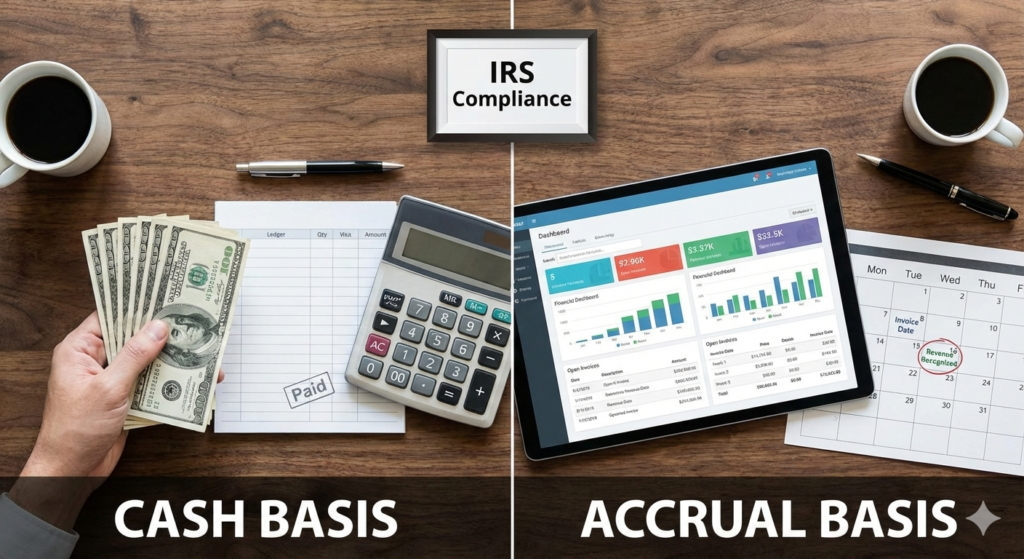
Table of Contents
- The Definition and Critical Role of Accounting Methods
- Comparing the Two Primary Methods: Cash vs. Accrual
- Eligibility Criteria and Mandatory Usage Rules
- Common Misunderstandings and Important Precautions
- How to Verify Official Guidelines Independently
- Practical Next Steps for Understanding Accounting Basis: The Fundamentals of Business Accounting
1. The Definition and Critical Role of Accounting Methods
For every business owner, financial transparency begins with a clear system for recording transactions. At the heart of this system is Understanding Accounting Basis: The Fundamentals of Business Accounting, which refers to the specific rules and timing used to determine when income and expenses are recognized in your financial records.
Choosing the right accounting basis is not merely an internal administrative decision; it is a legal requirement governed by the Internal Revenue Service (IRS). Official government guidelines stipulate that a business must use a consistent method that clearly reflects its income. Proper application of these fundamentals ensures that a business remains compliant with federal tax laws and provides an accurate picture of its economic health to stakeholders and public institutions.
2. Comparing the Two Primary Methods: Cash vs. Accrual
Within the framework of Understanding Accounting Basis: The Fundamentals of Business Accounting, there are two primary methodologies used by businesses: the Cash Method and the Accrual Method. Each has distinct rules regarding the timing of revenue and expense recognition.
The Cash Method
The cash method is often used by small businesses and sole proprietorships because of its simplicity. Under this basis:
- Income Recognition: Revenue is recorded only when the payment is actually received in hand or deposited.
- Expense Recognition: Costs are recorded only when the payment is actually made to a vendor or employee.
- Primary Benefit: It provides a real-time view of cash flow, making it easier to manage daily liquidity.
The Accrual Method
The accrual method is more complex and provides a more comprehensive view of long-term profitability. Under this basis:
- Income Recognition: Revenue is recorded when the service is provided or the product is delivered, regardless of when the cash is received.
- Expense Recognition: Expenses are recorded when the obligation is incurred, not necessarily when the bill is paid.
- Primary Benefit: It aligns with the “matching principle,” ensuring that revenues and the expenses incurred to earn them are reported in the same period.
3. Eligibility Criteria and Mandatory Usage Rules
While many small businesses prefer the simplicity of the cash method, the IRS mandates the use of the accrual method for certain entities. Understanding Accounting Basis: The Fundamentals of Business Accounting requires an evaluation of your business structure and annual gross receipts.
Comparison Table of Accounting Methods
| Category | Cash Basis | Accrual Basis |
| Recognition Timing | When cash is received/paid | When transaction occurs |
| Inventory Requirement | Generally not suitable | Mandatory for businesses with inventory |
| Complexity | Low (Single-entry) | High (Double-entry) |
| Typical Eligibility | Small service-based businesses | Corporations and large-scale retailers |
| IRS Threshold | Under $30 Million (subject to update) | Over $30 Million (subject to update) |
Note: The gross receipts threshold for mandatory accrual accounting (the “gross receipts test”) may vary depending on the year or policy updates. For the 2026 tax year, businesses should confirm the current inflation-adjusted threshold through official announcements.
4. Common Misunderstandings and Important Precautions
In the context of Understanding Accounting Basis: The Fundamentals of Business Accounting, several misconceptions can lead to compliance issues.
- Switching Methods: A business cannot simply change its accounting method at will. If you wish to switch from cash to accrual (or vice versa), you must generally file Form 3115 (Application for Change in Accounting Method) and receive approval from the IRS.
- Consistency Requirement: Once a method is chosen, it must be applied consistently from year to year. Frequent changes without official justification can trigger audits.
- Inventory Impact: Many taxpayers mistakenly believe they can use the cash method while maintaining significant inventory. However, if the production, purchase, or sale of merchandise is an income-producing factor, the accrual method is typically required for purchases and sales.
5. How to Verify Official Guidelines Independently
Because tax codes and accounting standards are subject to frequent legislative revisions, it is vital to verify information through official sources.
To confirm your eligibility or the current rules for Understanding Accounting Basis: The Fundamentals of Business Accounting, you should consult official government publications. Search for “IRS Publication 538” on government websites to access the definitive guide on accounting periods and methods. This document outlines the allowed usage locations for different methods and provides the most recent updates on gross receipt tests. Always prioritize documents with a “.gov” domain to ensure the information is fact-checked and legally binding.
6. Practical Next Steps for Understanding Accounting Basis: The Fundamentals of Business Accounting
Successfully managing your company’s finances depends on a deep Understanding Accounting Basis: The Fundamentals of Business Accounting. Choosing between the cash and accrual methods is a foundational step that influences your tax liability, financial reporting, and long-term planning.
As a next step, evaluate your current gross receipts and determine if your business is reaching the threshold for mandatory accrual accounting. If your business is growing or you are beginning to hold inventory, it is recommended to review your current bookkeeping practices. Please confirm the latest criteria through official announcements before the start of the next fiscal year to ensure your reporting remains accurate and compliant. Proper foundational accounting is the most reliable way to protect your business and prepare for future growth.
This article is for informational purposes only. Consult a licensed CPA or accounting professional for personalized advice.