
This guide provides a comprehensive overview of the LLC Setup guide for entrepreneurs planning to establish a presence in the US market. It details the essential procedures, including eligibility requirements, mandatory documentation, and the recently strengthened federal reporting obligations. By following these steps based on verified public information, you can ensure a compliant and secure start to your business operations.
Table of Contents
- Understanding the LLC Structure and Purpose
- Crucial Pre-Step: Comparative Analysis of Business Entities (New Title added)
- Eligibility and Prerequisites for LLC Formation
- Step-by-Step LLC Setup Guide (5 Steps)
- Critical Precautions Before Incorporation
- Frequently Asked Questions (FAQ)
- How to Verify Official Information
- First Steps for Successful LLC Operation
Understanding the LLC Structure and Purpose
A Limited Liability Company (LLC) is one of the most popular business structures in the United States. It combines the liability protection of a corporation with the tax efficiency of a partnership. According to the U.S. Small Business Administration (SBA), an LLC protects the owners’ (Members) personal assets from business-related lawsuits or debts while typically allowing profits to pass through to personal tax returns, avoiding double taxation.
To conduct legal business activities, open business banking accounts, and utilize payment gateways (such as Stripe or PayPal) within the US, registering a formal legal entity with the state government is a fundamental requirement.
Crucial Pre-Step: Comparative Analysis of Business Entities
While this guide focuses on the LLC due to its popularity and flexibility, it is imperative to determine if it is truly the optimal legal structure for your specific business goals before initiating the formation process.
The US offers various entity types, each with distinct implications for personal liability protection, taxation frameworks, administrative burden, and potential for raising capital. Choosing the wrong entity initially can lead to unnecessary complexities or costs down the road.
Eligibility and Prerequisites for LLC Formation
Establishing an LLC in the US is not strictly limited by nationality or residency. Non-US citizens and non-residents living abroad can legally form and own an LLC, provided they follow the correct procedures. However, specific regulations and filing fees vary significantly by the state of formation, making preliminary research essential.
- Minimum Age: Generally 18 years or older (may vary by state).
- Required Information: Identification (e.g., Passport), a valid business address, and Registered Agent details.
Step-by-Step LLC Setup Guide (5 Steps)
While specific procedures depend on the regulations of each state’s Secretary of State office, the following five steps constitute the standard process for formation.
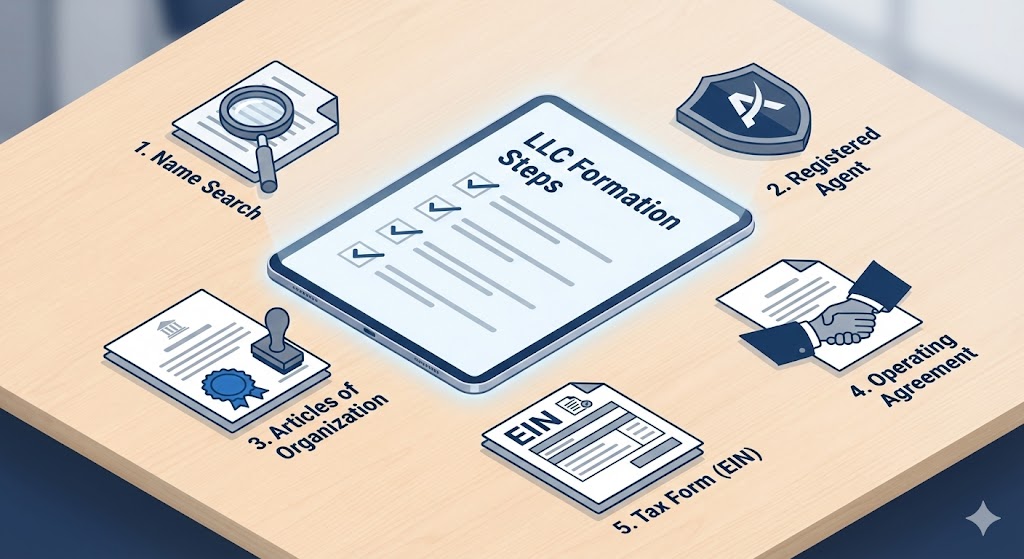
1. Business Name Search and Reservation
First, you must verify that your desired company name is available in the state where you intend to incorporate. Use the corporate database on the Secretary of State’s website to ensure the name does not conflict with existing entities. The name must include a legal designator such as “LLC,” “L.L.C.,” or “Limited Liability Company.”
2. Designating a Registered Agent
Every LLC is required to appoint a “Registered Agent” to accept legal papers and government correspondence on behalf of the business. The Registered Agent must have a physical address in the state of formation and be available during standard business hours. If the business owner does not reside in that state, engaging a professional Registered Agent service is common practice.
3. Filing Articles of Organization
To create the legal entity, you must file the “Articles of Organization” (sometimes called a Certificate of Formation) with the state government and pay the filing fee. This document typically includes the company name, address, Registered Agent information, and management structure (Member-managed or Manager-managed).
4. Drafting an Operating Agreement
While not legally required by all states, the SBA and legal experts strongly recommend creating an Operating Agreement. This internal document outlines ownership percentages, profit distribution, decision-making powers, and dissolution procedures. It serves to prevent future disputes among members and reinforces the company’s limited liability protection.
5. Obtaining an EIN and Federal Compliance
After state approval, you must obtain an Employer Identification Number (EIN) from the Internal Revenue Service (IRS). This acts as the tax ID for the business and is required for hiring employees and opening bank accounts. Additionally, effective 2024, under the Corporate Transparency Act, many LLCs must file a “Beneficial Ownership Information” (BOI) report with the Financial Crimes Enforcement Network (FinCEN).
Critical Precautions Before Incorporation
| Category | Details | Important Notes |
| Formation Costs | Varies by state ($50 – $800+) | Does not include annual maintenance fees. |
| Maintenance | Mandatory Annual/Biennial Reports | Failure to file can lead to penalties or administrative dissolution. |
| Tax Structure | Default Pass-through taxation | Option to elect C-Corp taxation exists. |
| Licensing | Business/Occupational Licenses | Requirements depend heavily on industry and location. |
- Conditional Information: Filing fees, tax rates, and reporting deadlines are subject to change based on state legislative updates or the fiscal year. You must confirm the latest criteria through official announcements.
Frequently Asked Questions (FAQ)
Can a non-US resident form an LLC without visiting the US?
Yes, it is possible. In most states, the filing of formation documents can be completed entirely online. However, opening a business bank account may require a physical visit depending on the specific bank’s compliance policies (KYC/AML), so it is advisable to check current banking requirements.
Are there ongoing costs after the initial setup fee?
Yes. Most states require LLCs to file an “Annual Report” (or Statement of Information) and pay an associated fee to maintain good standing. Some states, like California, impose a minimum annual franchise tax regardless of profit.
Can I file for an LLC myself without a lawyer?
Legally, individuals are permitted to file their own formation documents. However, due to varying state laws, complex tax implications, and strict federal reporting requirements like the BOI report, consulting with a professional or using a specialized filing service is often recommended to ensure full compliance.
How to Verify Official Information
Since regulations can change, it is crucial to cross-reference all information with official government sources before taking action regarding the LLC Setup guide.
- Formation Requirements: The official website of the Secretary of State or Division of Corporations for the specific state (
.govdomains). - Taxation & EIN: The official Internal Revenue Service (IRS) website.
- Ownership Reporting (BOI): The official Financial Crimes Enforcement Network (FinCEN) website.
- General Business Guidance: The official U.S. Small Business Administration (SBA) website.
First Steps for Successful LLC Operation
We have reviewed the standard LLC Setup guide and the five essential steps for establishing a secure business foundation in the US. Forming an LLC is more than just filing paperwork; it is a critical process for securing legal protection and building credibility. By rigorously preparing using the official sources outlined above, you can ensure your business is positioned for a successful entry into the US market.
This article is for informational purposes only. Consult a CPA for personalized advice.